
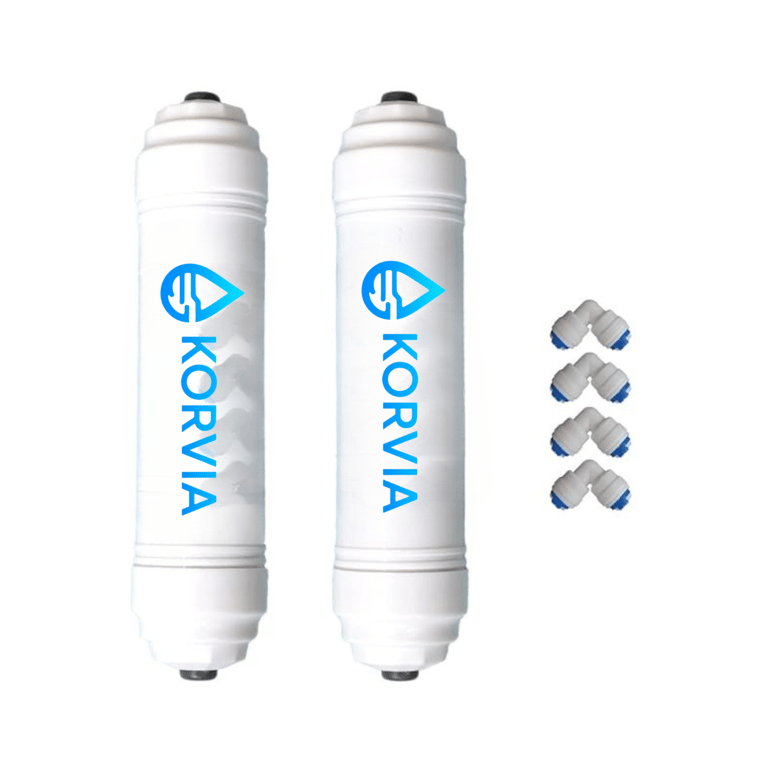

A UF (Ultrafiltration) filter is a membrane-based water purification system that uses physical filtration to remove contaminants, such as suspended solids, bacteria, viruses, and other microorganisms. It works by forcing water through a semi-permeable membrane with microscopic pores, which serve as a physical barrier.
Key characteristics
· Pore size: UF membranes typically have a pore size ranging from 0.01 to 0.1 microns. This is fine enough to block most harmful microorganisms while allowing water and dissolved minerals to pass through.
· Mechanism: The process relies on hydrostatic pressure, often just the standard home water pressure, to push water across the membrane.
· Function: Because it is a physical barrier, a UF filter effectively reduces turbidity (cloudiness), but it does not remove total dissolved solids (TDS) like salts and minerals.
· Energy consumption: Unlike a Reverse Osmosis (RO) system, a UF filter does not require electricity to operate, making it a cost-effective and energy-efficient option.
· Mineral retention: An advantage of UF over RO is that it retains essential minerals in the water, which are beneficial for health.
What a UF filter removes
· Microorganisms: UF membranes are highly effective at removing bacteria, cysts, and most viruses.
· Particulate matter: Suspended solids, colloids, silt, and other high-molecular-weight particles are filtered out.
· Other contaminants: Algae, protozoa, and some organic molecules are also removed.
Common applications
· Pre-treatment for RO systems: UF is often used as a pre-filter for Reverse Osmosis systems, protecting the more delicate RO membrane from fouling and extending its lifespan.
· Drinking water purification: It is used in standalone water purifiers, especially for municipal water with low TDS where the main concern is microbial contamination.
· Wastewater treatment: UF filters are widely used in municipal and industrial wastewater treatment to remove suspended solids and microorganisms.
· Industrial processes: Other applications include the food and beverage industry (clarifying juice), and the pharmaceutical industry (removing pyrogenic species).
UF vs. other filtration methods
· Vs. Microfiltration (MF): UF has a smaller pore size and can filter out more contaminants, including viruses, that an MF filter would miss.
· Vs. Reverse Osmosis (RO): RO has a much smaller pore size (0.0001 micron), which allows it to remove TDS like dissolved salts, but it also strips beneficial minerals and is less energy-efficient. A UF filter, in contrast, is better for low-TDS water where mineral retention is desired.
UF Filter
KORVIA
The core of pure.
CONTACT
support@groclean.in
+91 7985126886 +91 9305980970
© 2025. All rights reserved.